- DATE:
- AUTHOR:
- SAP LeanIX Product Team
Weekly feature improvement and bugfix summary
Calculations
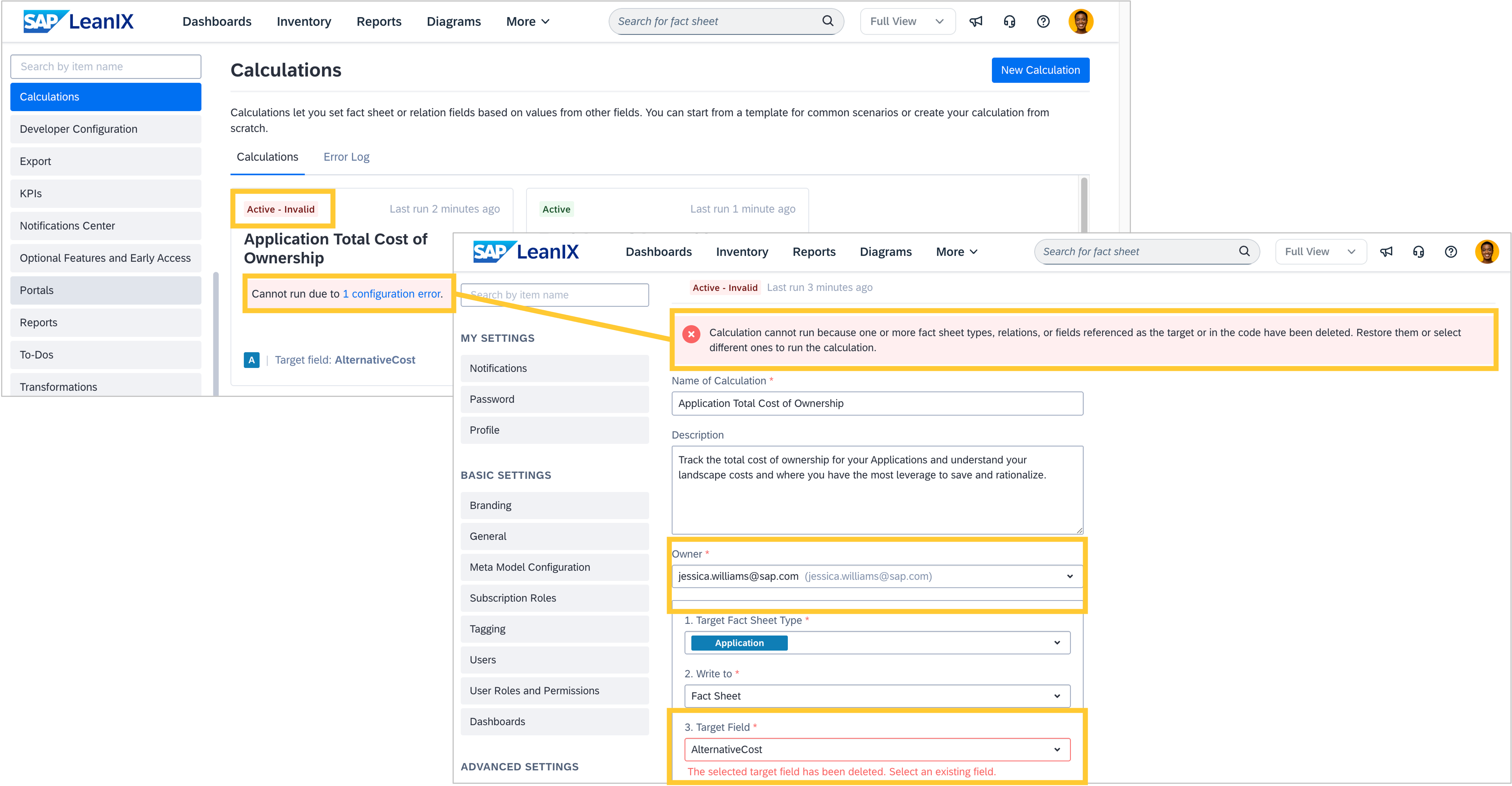
We introduced smarter error detection, better visibility into configuration issues, and improved accountability by introducing calculation owners. With this, calculations are now automatically validated whenever the meta-model changes, and errors are displayed when target fields, relations, or source fields are deleted or modified. Invalid calculations are automatically paused until fixed. Additionally, every calculation now requires an owner, making it easy to identify who to contact for calculation questions and improving accountability and maintenance of calculations.
Self-built software discovery
In tech stack discovery, we use discovered database drivers as proxies to match the corresponding database technology from the reference catalog. To improve data quality, after careful evaluation, we will stop this matching on February 9, 2026. This means technologies like PostgreSQL, MySQL, and other databases will no longer be automatically detected through their driver packages (e.g., pg-cursor, org.postgresql/postgresql). The reason is that we saw limitations like inaccurate matching results, misleading detections and a lack of lifecycle tracking. That means going forward, no fact sheets for database technologies detected via drivers will be created or linked. Fact sheets created in the past will continue to exist - no data will be deleted, and no action is required from you. If you want to keep the current database matching rules, we can provide the rules to you so you can create them as custom rules.
Architecture decisions
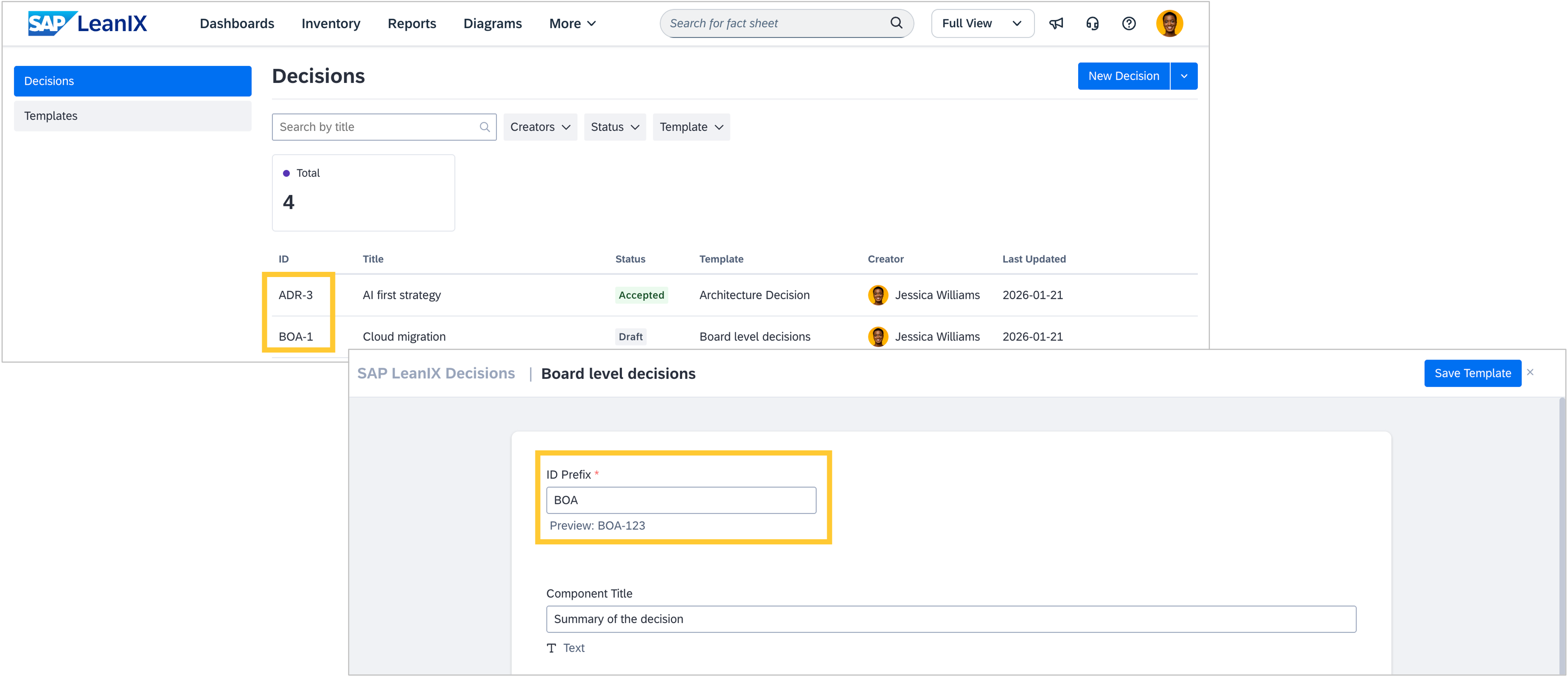
We introduced unique identifiers (IDs) for architecture decisions for clear cross-tool referencing. This makes it easier to reference, discuss, and track decisions across your organisation. Admins can set letter-based unique prefixes for each decision template, and an incremental number is automatically added to every new decision (e.g., ADR-42; BOA-23). Once generated, IDs remain stable, providing a reliable way to link to decisions from external tools like Confluence, Slack, or code repositories. The ID appears in lists and headers and can be used in conjunction with the decision's unique URL.